
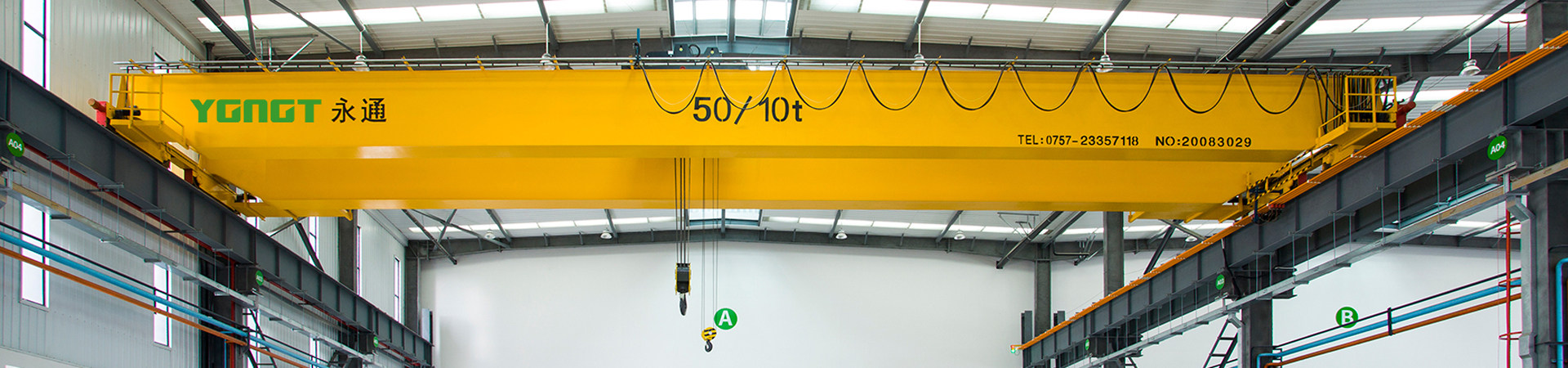
The garbage grab crane—commonly referred to as the waste grab crane or waste hoist—is a critical component of the feedstock handling system in waste-to-energy (WtE) power plants. Positioned above the waste storage pit, it performs essential functions including waste retrieval, conveyance, homogenization, extraction, and volumetric/gravimetric measurement. 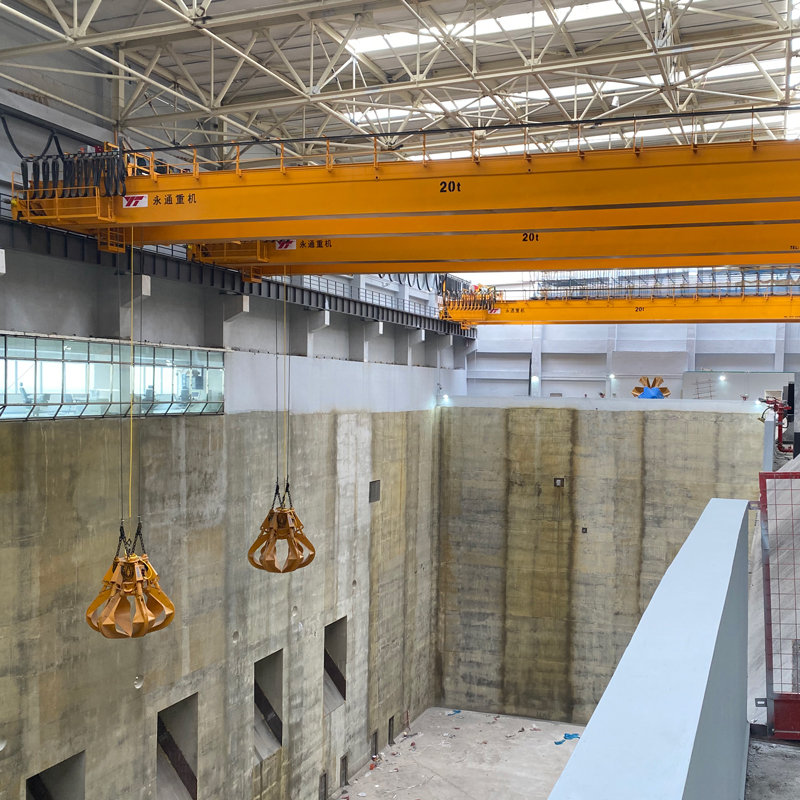 I. Application Scope
Garbage grab cranes are deployed across multiple waste management infrastructure segments:
• Waste-to-energy power plants: Serving as the primary feedstock transfer device, it conveys refuse from the storage pit to the incinerator feed hopper, ensuring continuous and controlled fuel supply.
• Refuse-derived fuel (RDF) production facilities: Facilitates storage, blending, and metered feeding of processed fuels—including plastic-rich fractions and dewatered sludge—for thermal utilization.
• Integrated solid waste management centers: Handles bulk transport and feeding of heterogeneous municipal solid waste (MSW) and conditionally accepted hazardous waste streams, in compliance with regulatory protocols.
• Waste sorting and resource recovery facilities: Supports staged material handling—including temporary storage, inter-process conveyance, and auxiliary mechanical sorting—aligned with upstream separation workflows.
II. Operational Performance
Garbage grab cranes are engineered for sustained high-intensity operation, characterized by exceptional load capacity, duty cycle resilience, and functional reliability. Key performance metrics include:
• Annual operating time: ~8,000 hours (near-continuous 24/7 availability)
• Daily throughput per unit: 800–2,400 metric tons
• Rated lifting capacity: 2–25 metric tons
• Grab bucket volume: 1–18 m³
• Lifting speed: 4.5–65 m/min
• Positioning accuracy: ≤ ±5 mm under fully automated control
Implementation of fully automated operation enables end-to-end execution of retrieval, transfer, feeding, stacking, and homogenization tasks without continuous manual oversight—thereby enhancing process consistency, labor efficiency, and operational safety. 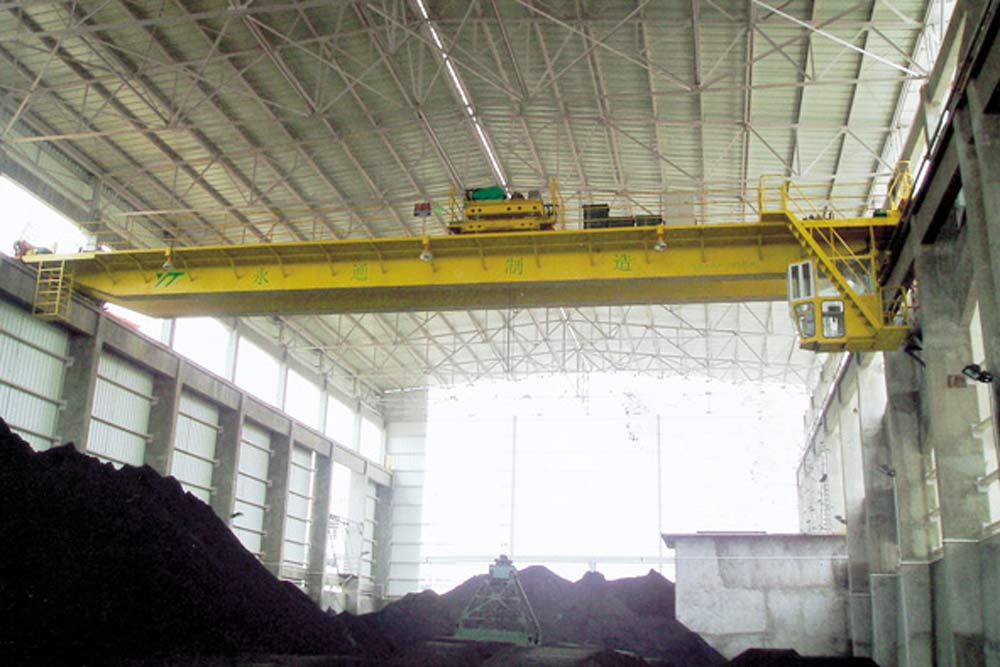
III. Operational Characteristics
1. Extreme Environmental Exposure
The equipment operates continuously in a highly aggressive environment marked by elevated ambient temperatures, high relative humidity, airborne particulate matter, and corrosive off-gases (e.g., H₂S, HCl, NH₃) generated during organic waste decomposition. Prolonged exposure necessitates robust corrosion protection—including specialized coatings, stainless-steel structural elements, and sealed electrical enclosures—to ensure long-term integrity of both mechanical and control systems.
2. Heavy-Duty Service Requirements
With an annual operating duration approaching 8,000 hours and frequent start-stop cycles under variable load conditions, the crane is classified under ISO 4301 duty classes A7–A8 (very heavy to extreme service). Consequently, its structural design must meet stringent fatigue life criteria, and key components—including main girders, hoisting mechanisms, and drive systems—are engineered to exceed standard industrial crane specifications.
3. Mission-Critical Reliability
Unplanned downtime of the garbage grab crane directly disrupts incinerator feed continuity, potentially triggering cascading plant-wide shutdowns. To mitigate operational risk, modern systems incorporate redundant subsystems (e.g., dual hoisting motors, backup PLCs), real-time fault self-diagnosis, predictive maintenance analytics, and secure remote monitoring capabilities compliant with industrial cybersecurity standards.
4. Flexible Control Architecture
Contemporary garbage grab cranes support three interoperable control modes:
• Manual mode: Direct operator control via an ergonomically designed cabin console with joystick-based linkage interface.
• Semi-automatic mode: Operator-initiated grab engagement followed by autonomous execution of transfer, weighing, and precise hopper discharge.
• Fully automatic mode: Closed-loop coordination with plant-level DCS/SCADA; path planning and motion sequencing driven by real-time data from level sensors, 3D laser scanners, and material density models.
5. Integration of Intelligent Technologies
Advanced systems embed digital and automation technologies to enhance precision, safety, and data transparency:
• 3D laser scanning & digital twin modeling: Enables dynamic reconstruction of the waste pit’s topography and real-time identification of optimal grab locations.
• Active anti-sway control algorithms: Reduce residual grab oscillation amplitude by >95%, improving positioning repeatability and reducing structural stress.
• In-motion dynamic weighing: Provides traceable, real-time mass measurement of each grab cycle, supporting feedstock accounting and emissions reporting.
• Embedded diagnostics & prognostics: Continuously monitors component health (e.g., brake wear, motor temperature, rope tension), enabling condition-based maintenance scheduling.
6. Elevated Maintenance Complexity
Owing to environmental severity and mechanical sophistication, routine inspection, preventive maintenance, and component replacement require specialized technical expertise. Critical maintenance activities include periodic non-destructive testing (NDT) of wire ropes and welds, calibration of load cells and position encoders, functional validation of safety interlocks, and scheduled overhaul of hydraulic actuators and braking systems—all conducted in accordance with OEM guidelines and ISO 12100-compliant risk assessments. 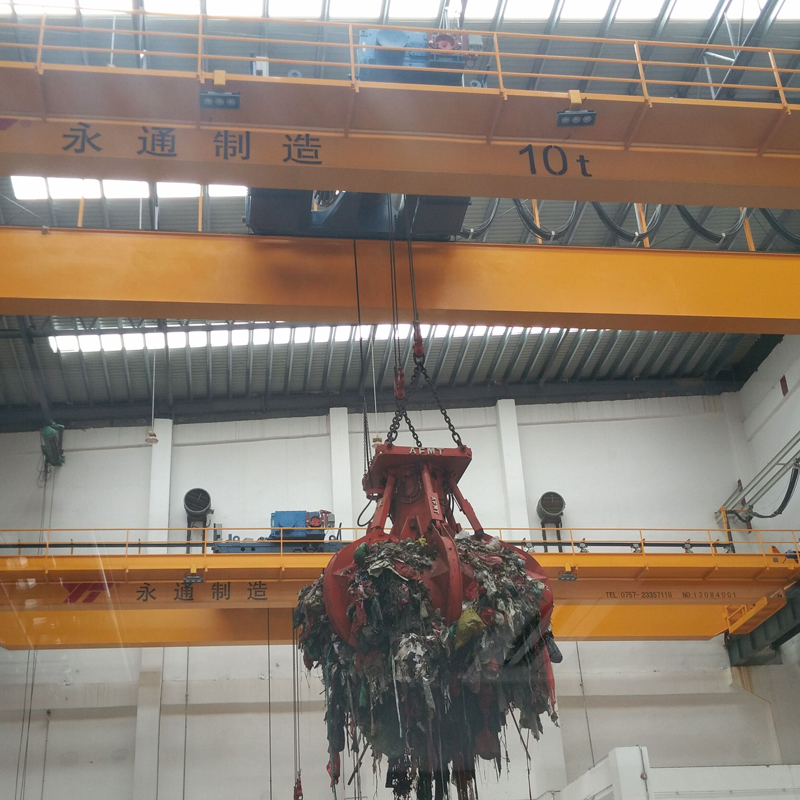
As the principal material-handling interface between waste storage and thermal conversion, the garbage grab crane functions as the “intelligent steel hand” of modern WtE facilities. Its ongoing evolution—from electromechanical workhorse to digitally integrated, decision-support-enabled asset—reflects broader industry advances in Industry 4.0, digital twin deployment, and AI-augmented process optimization. This transformation strengthens the technical foundation for achieving the triple objectives of urban waste management: waste minimization, resource recovery, and environmentally sound disposal.