
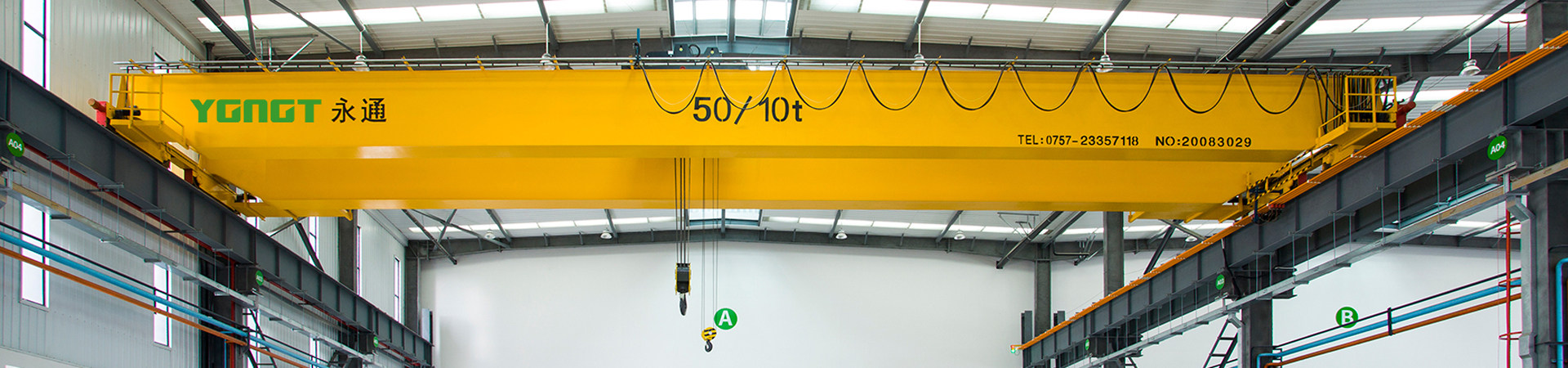
At present, there are mainly two speed regulation methods for overhead cranes: the traditional rotor series resistance speed regulation and the advanced variable frequency speed regulation. The method of adjusting the speed depends on the current control system of your equipment.
Traditional speed regulation: By switching the gear position of the master control panel to change the resistance value of the rotor in series, stepwise speed regulation is achieved. The speed can only change in fixed steps and cannot be finely controlled. If the acceleration is too fast, it may be due to an abnormal sequence of resistance removal, which is a device fault.
Advanced speed regulation: Through PLC and frequency converter, modify the acceleration and deceleration time parameters, adjust the frequency change rate of the output, and can achieve smooth stepless speed regulation. Shortening the acceleration and deceleration time appropriately can improve the dynamic response speed, but it needs to be repeatedly tested during debugging to find the optimal value.
For old equipment that is still using rotor series resistance speed regulation, if you want to significantly improve speed and operational efficiency, the recommended solution is to carry out variable frequency speed regulation renovation. This not only realizes stepless speed regulation and soft start, but also reduces mechanical impact and energy consumption.
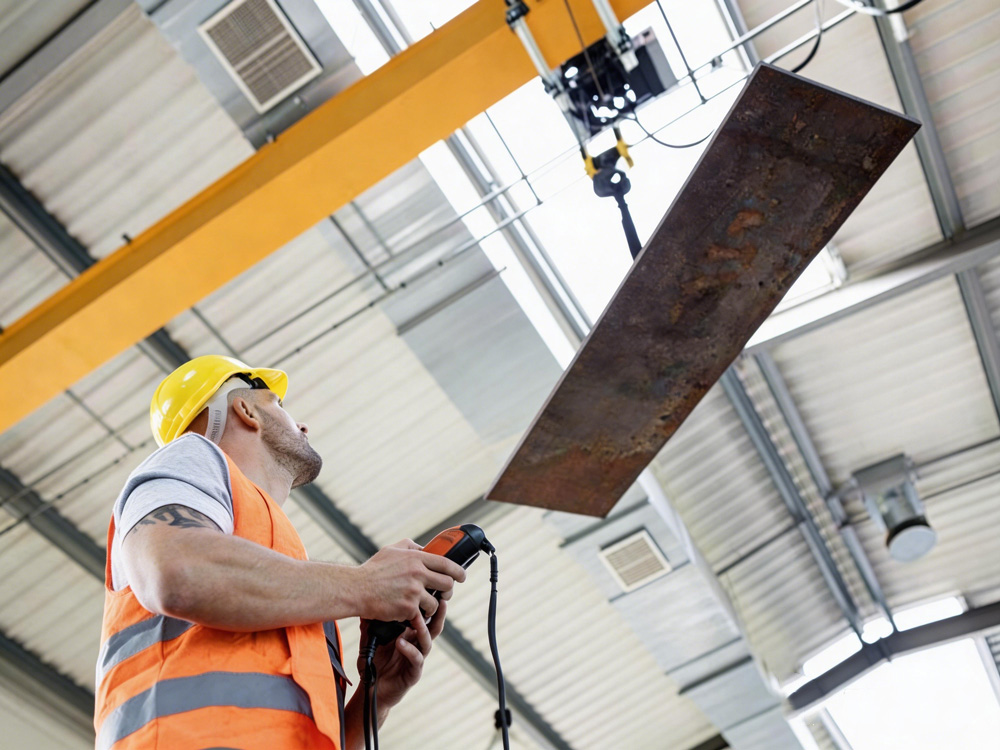
Safety risks arising from increased crane operating speed
Increasing the operating speed of cranes, especially without adequate assessment and systematic modification, introduces a series of serious safety risks. The specific risks mainly manifest in the following aspects:
Load sway and positioning difficulties: sudden changes in speed (especially during acceleration and deceleration) are the main cause of load sway. The faster the speed, the greater the sway amplitude. It not only makes precise positioning difficult but also the swaying load may collide with surrounding personnel, equipment, or factory structures.
Mechanical shock and structural damage: excessive starting and braking can generate huge impact loads on the transmission mechanisms (such as reducers, couplings) and metal structures (such as bridges). This will accelerate component fatigue, wear, and even cause cracks or fractures. At the same time, it may cause asynchronous movement of the crane and result in "rail biting" phenomena, significantly shortening the lifespan of the crane.
Extended braking distance and risk of loss of control: the faster the speed, the longer the distance required from issuing the stop command to complete stopping. In emergency situations, this may lead to failure to stop within a safe distance. For the lifting mechanism, if the control system does not cooperate perfectly (for example, the opening timing of the brake is inappropriate), after increasing the speed, it may even cause a fall accident with the lifted load.
Increased consequences of operational errors: at high speeds, the time available for operators to observe, judge, and correct errors is significantly reduced. A minor operational error, under high-speed conditions, may rapidly escalate into a serious accident.
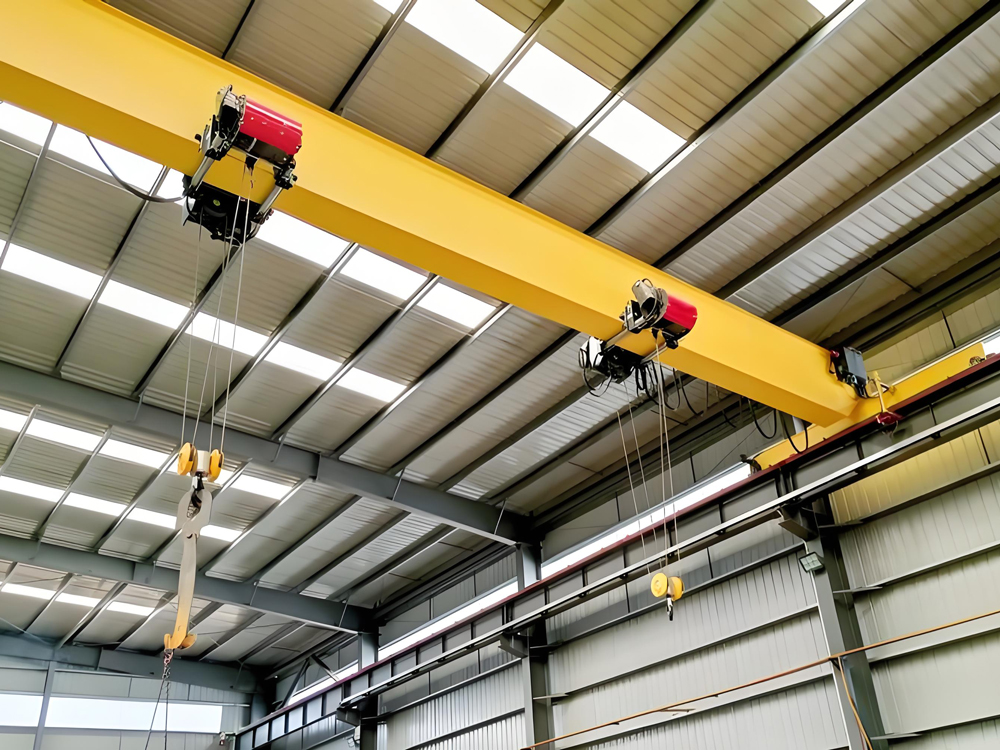
Safety measures to be taken during speed increase
In order to enhance efficiency while ensuring safety, the following comprehensive measures must be implemented:
Carry out professional technical renovations: If the equipment is old, consider implementing frequency conversion renovations. Modern frequency conversion technology can provide smooth start-up and braking as well as precise speed control, fundamentally reducing shocks and oscillations.
Strictly follow safety operation procedures: After increasing speed, the operation procedures must be reemphasized and retrained. For example:
The start-up should be smooth and accelerate step by step: the conversion time for each gear of the operating mechanism should be no less than 3 seconds. It is strictly prohibited to start at high speed.
When approaching the end point, the speed should be reduced. It is strictly forbidden to use the end-point switch as a means of stopping. It is absolutely not allowed to achieve braking by reversing.
During operation, attention must be paid to avoiding sudden acceleration or deceleration of the load.
Carry out strict debugging and testing: after modifying or adjusting the parameters, sufficient no-load and full-load debugging must be conducted. Repeatedly adjust parameters such as acceleration and deceleration times until an optimal state is reached that can meet efficiency requirements while ensuring smooth and safe operation.
Strengthen daily inspection and maintenance: after increasing the speed, the braking devices, steel wires, limit switches, and other safety components of the overhead crane bear greater pressure. They need to be inspected more frequently to ensure their sensitivity and reliability.
Increase the operating speed of the overhead crane. The preferred solution is to upgrade and modify the speed control system rather than simply adjusting the existing equipment. Simply increasing the operating speed will indeed bring significant safety risks. It is necessary to combine technical upgrades and safety measures to comprehensively solve the problem. It is recommended to contact professional lifting equipment manufacturers or electrical engineers to evaluate the specific equipment on site and formulate a scientific and reasonable renovation or parameter adjustment plan. Do not operate blindly.